2025
Kyra AI
Making personal styling feel as easy as having a conversation.
Role
UI/UX Designer
Year
2025
Platform
Mobile app
Focus
AI assistant · Wardrobe · Outfit planning
Kyra AI is an AI-powered fashion and styling app. It helps people understand their wardrobe, plan outfits and get personalised recommendations through an AI styling assistant.
Fashion apps are good at showing you more clothes. They are less good at helping you decide what to wear.
Kyra connects what you already own, what you like and where you are going — and puts an assistant in the middle of all three.
My job was to give that assistant a place inside the product.
01 — The hook
What if your wardrobe could actually help you decide what to wear?
Kyra AI
My wardrobe
What I own
My style
What I like
My occasion
Where I am going
Outfit idea
Getting dressed sounds simple until you have to make the decision.
Kyra brings three things into one experience:
- Your wardrobe
- Your occasion
- Your personal style
Instead of treating fashion discovery, wardrobe management and styling as three separate experiences, Kyra connects them through an AI assistant.
02 — The problem
The problem wasn't finding clothes. It was knowing what to do with them.
What do I wear?
What do I own?
What do I like?
Where am I going?
What works together?
Outfit decision
“What should I wear to a dinner tonight?”
Ask Kyra
Fashion apps tend to focus on discovery.
But having more clothes doesn't make deciding what to wear any easier.
Kyra was designed around a different question:
What if the app understood what you already own, what you like, and where you're going?
That meant the experience had to connect:
The existing wardrobe.Personal style.Different occasions.Outfit decisions.Fashion recommendations.
03 — The shift
So we moved the experience from browsing to asking.
Browsing
- Open the app
- Scroll the feed
- Pick a category
- Compare
- Still deciding
Asking
- Ask a question
- Get an outfit
The central idea became Kyra AI.
Rather than making users navigate several screens to find styling inspiration, they could simply start a conversation.
What should I wear to a dinner tonight?
Kyra became the starting point for finding an outfit. The rest of the product provided the context behind the recommendation.
- Conversation
- Wardrobe
- Occasion
- Recommendation
04 — The system
One styling experience, built around four connected pieces.
01 · Digital wardrobe
Catalogue
Add what you already own
Categories
Tops · Bottoms · Footwear
The point
A virtual version of your closet
02 · Kyra AI
Ask
In plain language, not filters
Answer
An outfit, not a search result
Follow up
Change it without starting over
03 · Event planning
Occasion
Dinner · Wedding · Party · Casual
Outfit
Built for that day, not in general
04 · Home and profile
Home
Content, picks and inspiration
Profile
Preferences, sizes and account
the assistant is one of the four — not a layer sitting on top of them
Kyra isn't just a chatbot.
The AI sits inside a larger product.
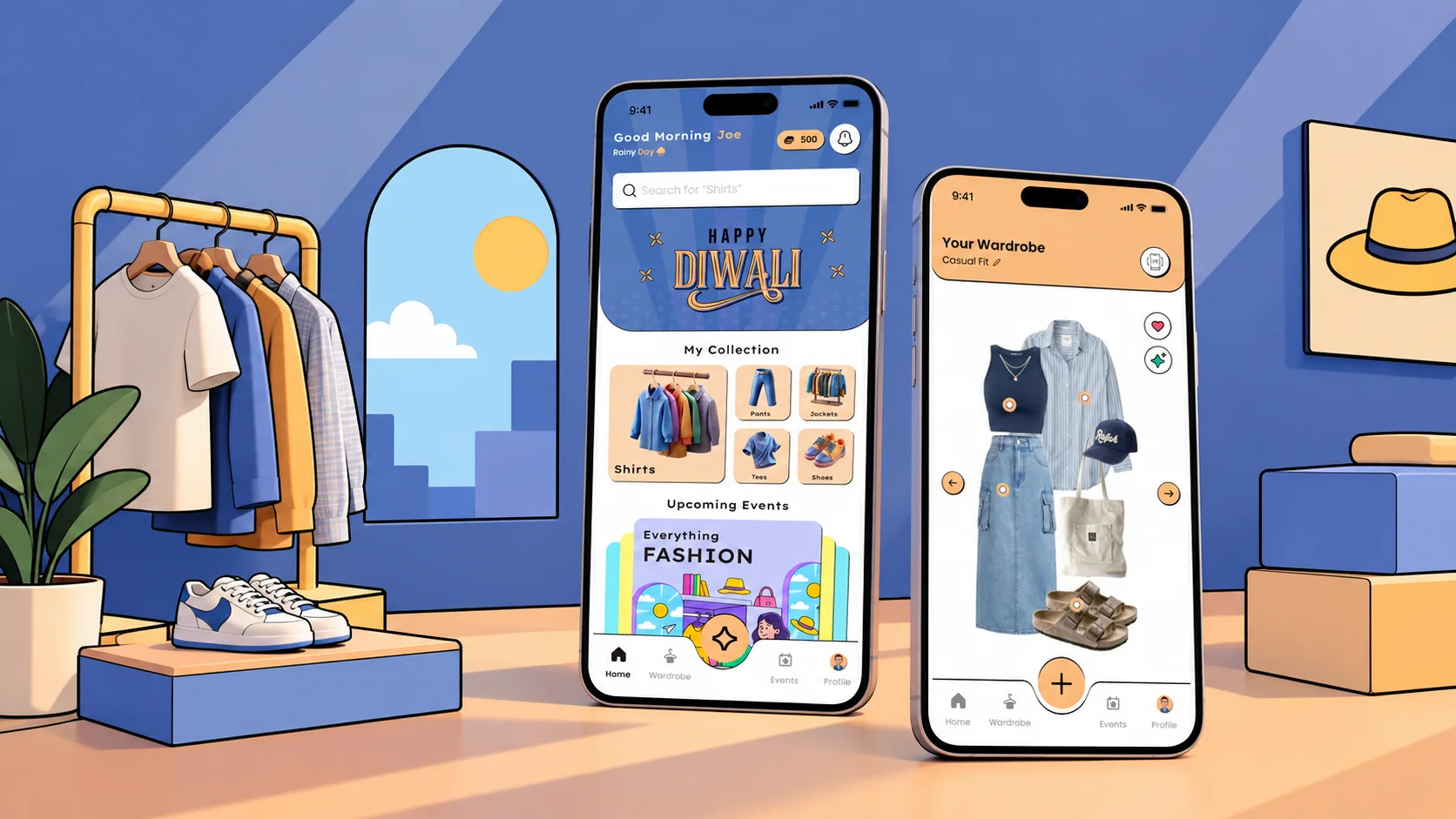
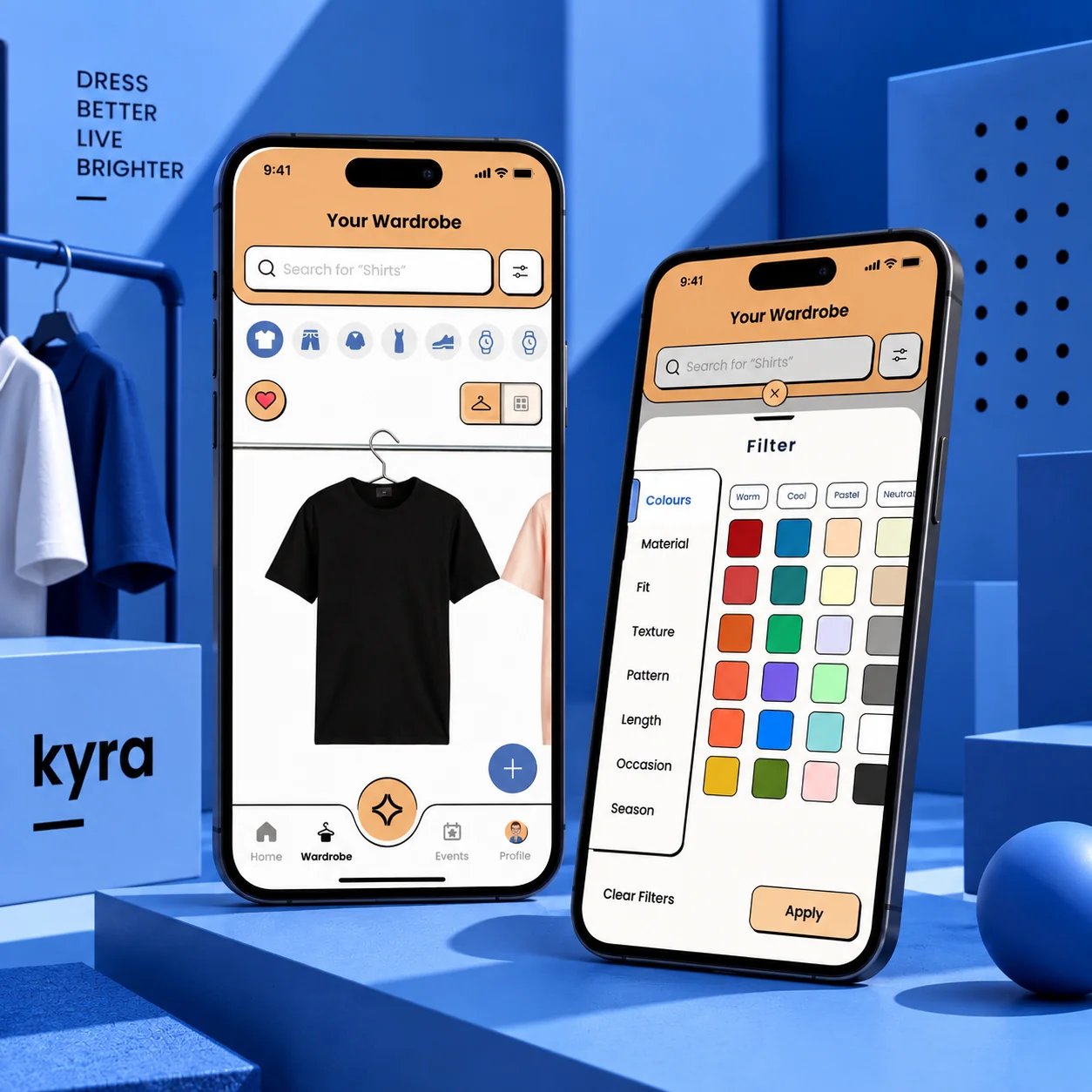
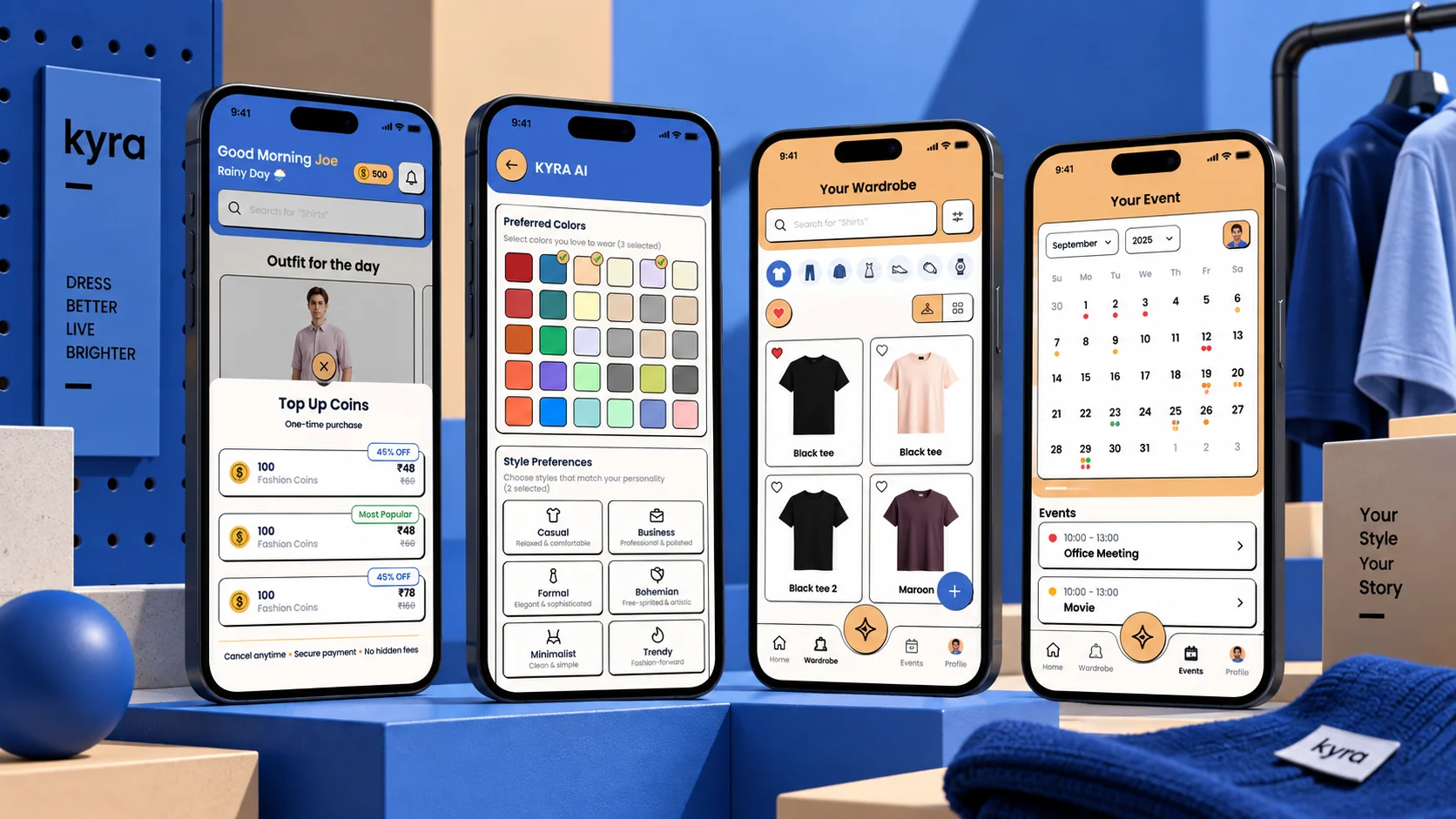
Digital wardrobe. Users catalogue their clothing and build a virtual representation of what they own.
Kyra AI. The conversational layer gives users a natural way to ask for advice and get outfit recommendations.
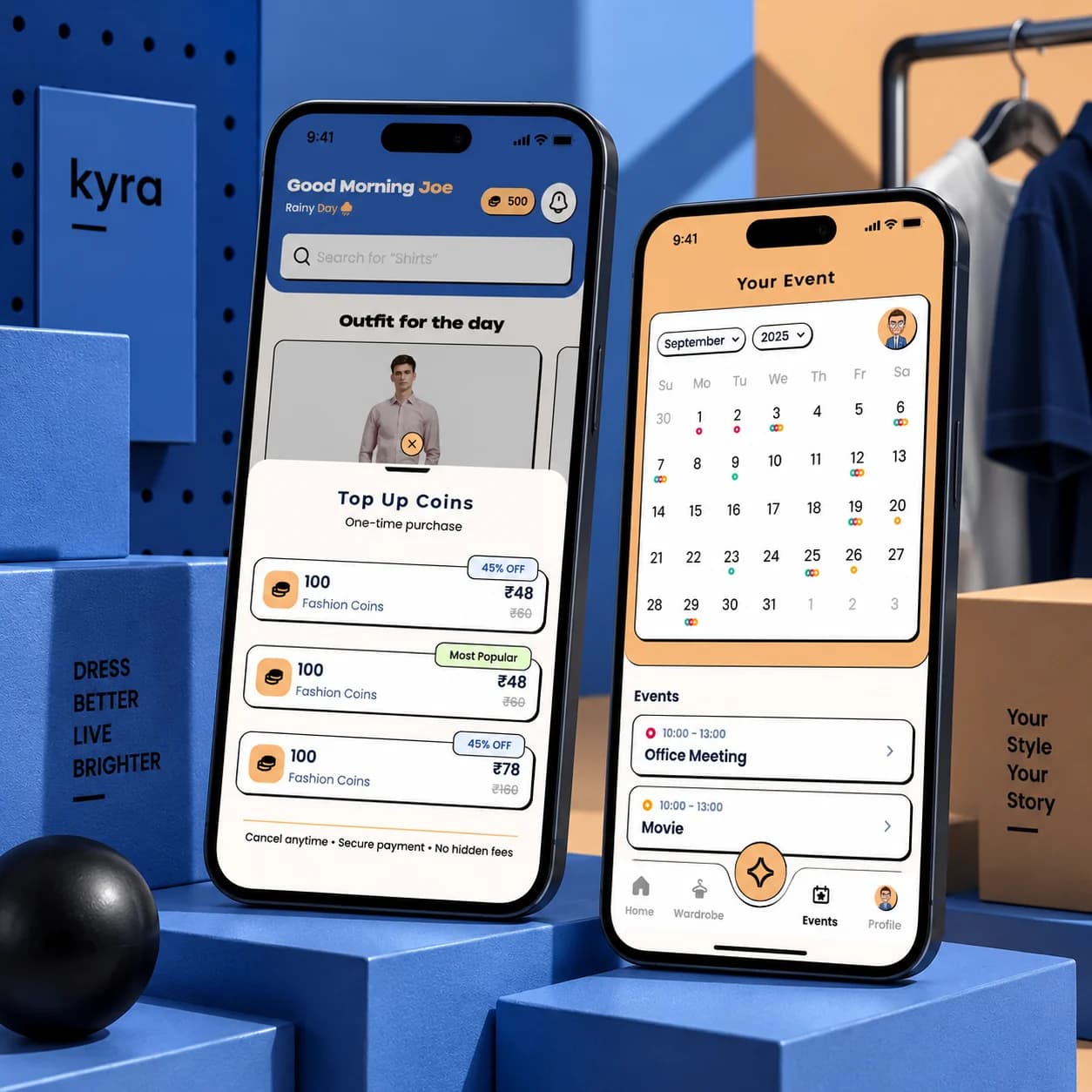
Event outfit planning. Recommendations are built around a specific occasion rather than served as generic fashion suggestions.
Home and profile. The feed carries fashion content and picks, while the profile holds the preferences that make a recommendation personal.
Four spaces, one assistant running through all of them.
05 — The decision
The AI needed context. So the product had to give it one.
User
“What should I wear tonight?”
Kyra AI
My style
The preferences on the profile
My wardrobe
The clothes already catalogued
My occasion
The event being dressed for
Outfit recommendation
A styling assistant is only as useful as the things it knows about you.
Instead of keeping Kyra isolated from the rest of the app, the experience connects the assistant to the wardrobe and to the user's own preferences.
That creates a simple relationship:
- User asks
- Kyra understands
- Wardrobe gives context
- Outfit gets personal
06 — The trade-off
We had to make AI feel helpful without making the experience feel complicated.
Too much information
Simple and useful
Too little context
Chat
Wardrobe
Events
Home
AI opens up endless possibilities.
The interface still has to feel simple.
So the product keeps four familiar spaces:
Chat, when you want advice.Wardrobe, when you want to manage what you own.Events, when you're planning what to wear.Home, when you want inspiration.
Each part has one clear purpose. Kyra connects them.
07 — The result
From a collection of fashion features to one personal styling system.
Wardrobe
Kyra AI
Events
Profile
One styling system
The pieces of getting dressed — what you own, what you like, where you're going — end up in one place instead of three.
One app. One wardrobe. One styling assistant.
What it brings together:
01
AI styling
Conversational fashion assistance.
02
Digital wardrobe
A virtual view of what you own.
03
Event planning
Outfits built around occasions.
04
Personalisation
Recommendations shaped around the user.
05
Fashion feed
Content, picks and inspiration.
08 — The reflection
The interesting part wasn't adding AI. It was giving the AI a place inside the product.
Kyra started with a simple idea: make fashion advice easier to get to.
The experience got more interesting once the AI stopped being a standalone feature.
The wardrobe gives it context.The preferences make it personal.The events give a recommendation a reason.And the conversation makes the whole thing feel natural.
AI works better when it understands the experience around it.
Comment
Suhail
Throw me the messy one. Those are the good ones.